


- How to Get a Medical Courier Job With No Experience
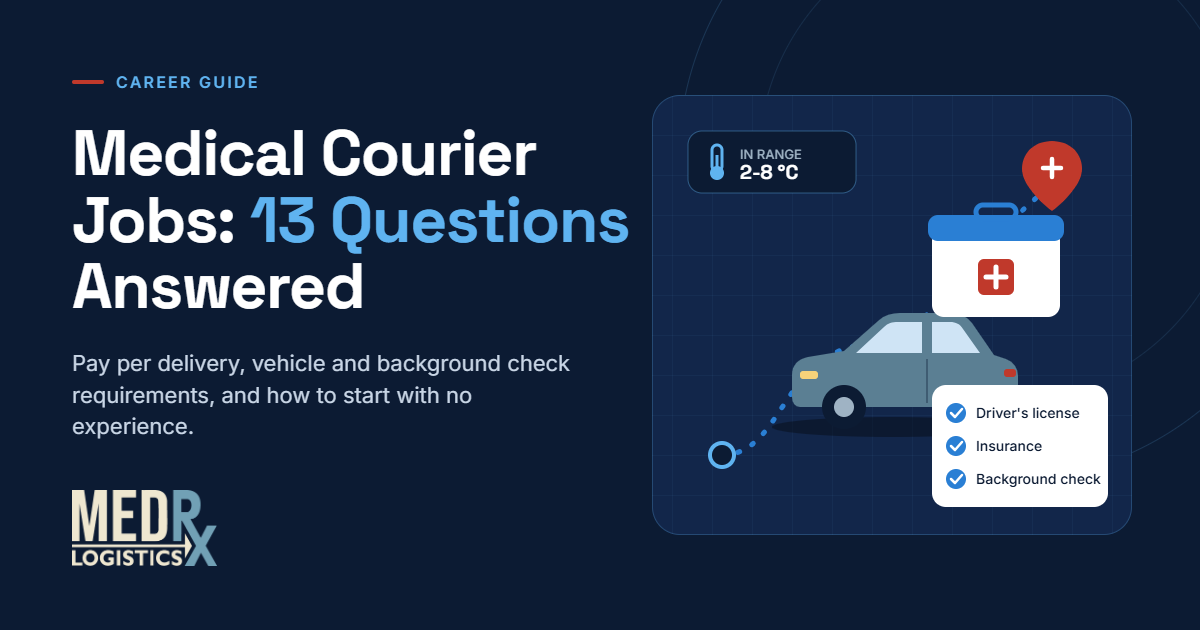
Most companies don’t require delivery experience. You need a valid driver’s license, a reliable vehicle, insurance, a clean driving record and a passed background check and drug screen. After you’re hired, the company trains you on HIPAA, OSHA bloodborne pathogens rules and chain-of-custody procedures. Hiring usually goes in this order: application, screening, document upload, training and onboarding, then your first routes. Prior customer service or delivery work helps but isn’t required. - Medical Courier Jobs as a Side Hustle: Can You Really Make Money?
Yes, especially if you can cover routes that recur on a schedule, like early-morning pharmacy runs, evening lab pickups or weekend STAT calls. Routes tend to be steadier than food delivery, and the per-trip pay is often higher. The tradeoff is that many routes run on fixed schedules, so you get less on-demand flexibility. Contractors also pay their own fuel, wear and tear, and self-employment taxes, so judge earnings after expenses, not by the gross figure. - What Vehicle Do You Need to Become a Medical Courier?
For most routes, a dependable, clean, four-door sedan, SUV or minivan in good mechanical shape is enough. Air conditioning that works is important for temperature-sensitive cargo. Some routes need more cargo space, and a few need refrigerated or temperature-controlled equipment, though the company often provides coolers or data loggers. Some companies also require a smartphone with GPS for tracking and proof of delivery. - Medical Courier vs. Food Delivery: Which Pays Better?
Medical courier work generally pays more per trip and is more predictable. Food delivery depends on tips and is much more flexible. Medical routes pay for responsibility, compliance training and reliability, so rates are less tied to surge pricing or customer generosity. Food delivery lets you log on and off at will. Medical work rewards consistency and often comes with recurring contracted routes. - How Much Do Medical Couriers Make Per Delivery?
It varies widely by market, distance, urgency and cargo type. A short local run might pay roughly $10 to $25. STAT, after-hours or long-distance runs can pay $40 to $100 or more. Some companies pay per mile. - Is Medical Courier Work Harder Than Regular Delivery?
It’s more demanding in responsibility than in physical effort. Packages are usually light (specimens, medications, small supplies), but the stakes are higher. You have to keep temperatures in range, maintain chain of custody, meet strict time windows and protect patient privacy. A missed scan or late delivery matters more than a cold pizza. Expect early starts, some heavier supply totes and careful documentation. - Medical Courier Requirements: Driving Record, Insurance, and More
Typical requirements:
- A valid driver’s license, usually held for at least 1 to 3 years
- A clean motor vehicle record, with no recent DUIs and few or no moving violations
- Personal auto insurance that meets state minimums; some companies require commercial or business-use coverage or higher limits
- Background check and drug screen
- Smartphone
- Completed compliance training: HIPAA, OSHA bloodborne pathogens and, for some routes, hazmat (IATA/DOT for certain specimens)
- Can You Work Multiple Medical Courier Companies at Once?
Usually yes, if you’re an independent contractor (1099), though you should check each contract for exclusivity or non-compete clauses. The challenge is scheduling. Medical routes often have fixed time windows, so overlapping commitments can hurt your reliability rating. W-2 employees should check their employer’s outside-work policy. - What’s the Difference Between Medical Courier and Regular Courier?
Medical couriers handle regulated, sensitive items: lab specimens, prescriptions, specialty drugs, medical equipment and clinical trial materials. That brings requirements a regular courier doesn’t face: HIPAA privacy rules, bloodborne pathogen safety, temperature control, chain-of-custody documentation and tight turnaround times. Regular couriers move documents and general parcels with fewer compliance rules. - Medical Courier Background Check: What Do Companies Look For?
Companies typically review:
- Criminal history, especially theft, drug offenses and violent crimes
- Motor vehicle record
- Identity verification
- Drug screening
Some also check sex offender registries or run healthcare sanctions checks such as the OIG exclusion list. Rules on how far back a check goes and what disqualifies an applicant vary by company and state, but the goal is to confirm the courier can be trusted with medications, patient data and hospital access.
- How Old Do You Have to Be to Work as a Medical Courier?
The usual minimum is 21, mainly because of insurance requirements. Some companies hire at 18 or 19. Many also require that you’ve held your license for at least 1 to 3 years. - How Flexible Are Medical Courier Jobs?
That depends on the role. App-based on-demand platforms offer the most flexibility. Contracted routes for pharmacies, labs and hospitals are steadier but run on set schedules. Many couriers mix the two: a recurring route for reliable income plus on-demand or STAT work for extra pay. Independent contractors control which routes they accept, but once you commit to a route, you have to show up and deliver on time. - Can You Be a Medical Courier With a Used Car?
Yes. Most companies care about condition, not age. A used car that’s reliable, clean, insured and mechanically sound usually qualifies. Some companies set a model-year limit (often around 15 years old or newer) or require an inspection. Working AC and a clean interior matter more than mileage, especially for temperature-sensitive deliveries.
Additional Resources:
- ShiftTracker: How Much Do Medical Couriers Make (2026)
- ShiftTracker: How to Become a Medical Courier (2026)
- Designbeep: Medical Courier Jobs: Pay, Requirements, and How to Get Hired
- ZipRecruiter: Medical Courier Jobs
- Dropoff: Medical Courier Service Rates in 2026