
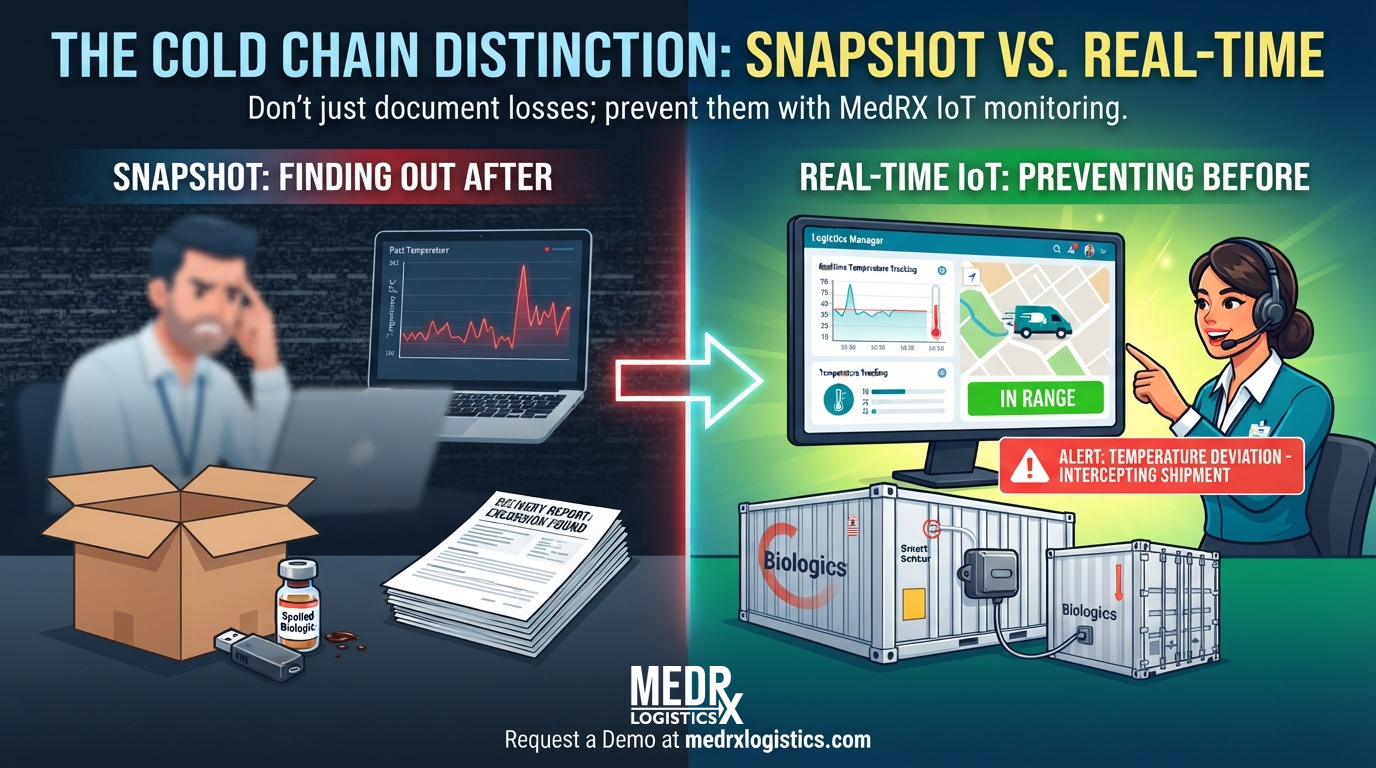
If your cold chain logistics provider uses a temperature data logger, you’re finding out about excursions after they happen. That distinction, real-time versus snapshot, is not a minor technical detail. It’s the difference between preventing a loss and writing it off.
How Snapshot Temperature Logging Works
A temperature data logger is a small electronic device placed inside a shipping container at the time of packaging. It records temperature readings at set intervals, often every 15 to 30 minutes, and stores that data internally. When the shipment is delivered, the logger is retrieved and the data is downloaded or printed.
The resulting report shows the full temperature history of the shipment. If the product stayed within range the entire time, that report becomes part of your chain of custody documentation. If it didn’t, the report tells you exactly when things went wrong.
After delivery.
Snapshot logging is documentation, not monitoring. It tells you what happened, it doesn’t give you any opportunity to prevent it.
How Real-Time IoT Monitoring Works
IoT-based temperature monitoring uses connected sensors that transmit readings continuously throughout transit. Rather than storing data for post-delivery review, they send it to a live monitoring system, with configurable alerts that trigger the moment a reading falls outside the target range.
With MedRX, that means:
- Temperature readings transmitted at regular intervals during transit
- Automated alerts dispatched to operations staff the moment a deviation is detected
- Immediate contact with the pharmacy or clinic, while the shipment is still in transit
- Real-time options: reroute, replace, hold for assessment. Before delivery
- Full documentation of the event, response, and outcome for regulatory purposes
The Financial Case for Real-Time Monitoring
A single cold chain excursion on a specialty biologic shipment costs an average of $50,000 when you account for product loss, regulatory reporting, patient impact assessment, and replacement sourcing. That figure doesn’t include the downstream cost of a DSCSA documentation failure surfacing in an accreditation audit.
For a specialty pharmacy handling 20 high-cost biologic shipments per week, even a 1-in-20 excursion rate represents a significant annual exposure. Real-time monitoring converts that risk from an unpredictable loss event to a managed, documentable process.
|
99.8%
MedRX time-in-range rate across monitored shipments
|
0
Excursions across 100,000+ shipments after switching to MedRX
|
<15 min
MedRX excursion response protocol activation time
|
What to Look for When Evaluating a Provider
When evaluating cold chain logistics providers, ask these questions directly:
- “Is your temperature monitoring real-time or snapshot-based?” A provider that uses data loggers will describe retrieving and reviewing the device after delivery. A real-time provider will describe alerts and live dashboards.
- “What happens when a deviation is detected?” If the answer involves reviewing records after delivery rather than contacting you during transit, that’s a snapshot system regardless of how it’s marketed.
- “Can you show me a sample excursion report?” A robust real-time provider will have a documented response protocol and sample reporting. If they can’t show you one, the protocol may not exist.
- “How quickly will I be notified of a temperature event?” “Within 15 minutes of detection” is a real-time standard. “After delivery” is a snapshot answer.
MedRX’s excursion response protocol activates within 15 minutes of any detected deviation. Your team is contacted while the shipment is still in transit: with options, not a post-delivery incident report.
|
Ready to protect every biologic you dispense?
|